Custom Die-Cut Foam Stickers: How Small, How Tooling Is Priced, Minimum Size
Want stars, animals, or logo outlines cut? How fine die-cutting goes, how tooling is priced, and whether too-small loses clean edges — a factory explains in one go.
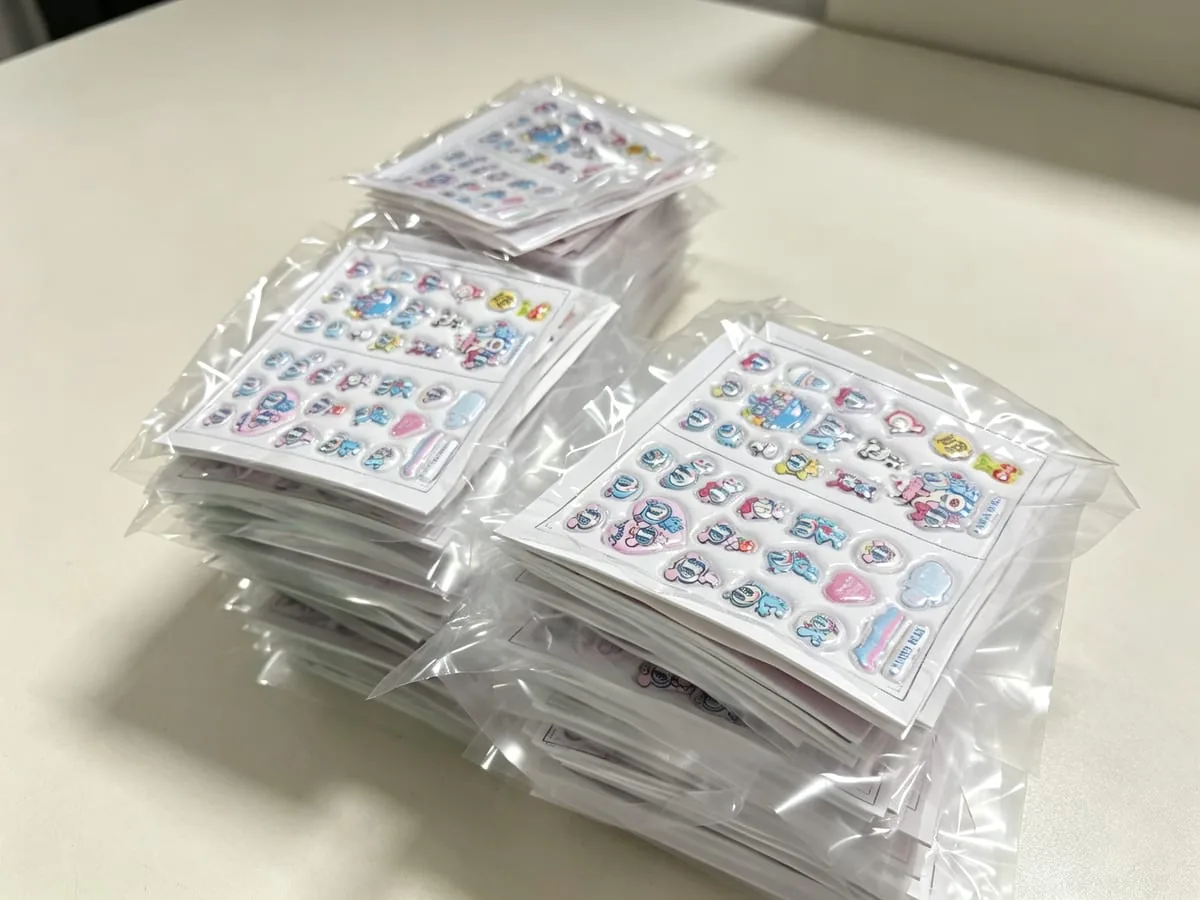
“Custom shape” on foam stickers is done with a steel die (cutting form): the whole sheet is punched to the outline, then waste is stripped and finished pieces taken. How complex depends on the die and material thickness.
How small and how fine
- Typical minimum edge ~8-10mm; smaller distorts in punching and is hard to de-web
- Fine lines / sharp corners: line width ≥1.5mm; too thin does not press cleanly under HF
- Rounded corners cut better than sharp ones — sharp corners curl and drop
- Thicker is harder for ultra-fine — 3mm foam fine work is less clean than 1mm
How tooling is priced
Tooling is quoted by “one die’s size + outline complexity,” not by piece count. Reorders of the same shape are not recharged (you own it). Multiple shapes laid on one sheet spread the per-shape cost.
What too-small causes
- De-web jams: finished piece sticks to the waste
- Punch drift: small pieces misalign at speed, burrs on edge
- Lamination offset: small pieces skew when transferring
- Advice: below 10mm edges, sample first to confirm feel before mass run
Our design advice
When sending artwork, keep line width above 1.5mm, round the corners, and avoid dense tiny islands. That lengthens die life, lifts yield, and helps the unit price.
Related Products
Related Reading
Need a quote for what you just read?
Send us your artwork, size and quantity — we reply within 24 hours.